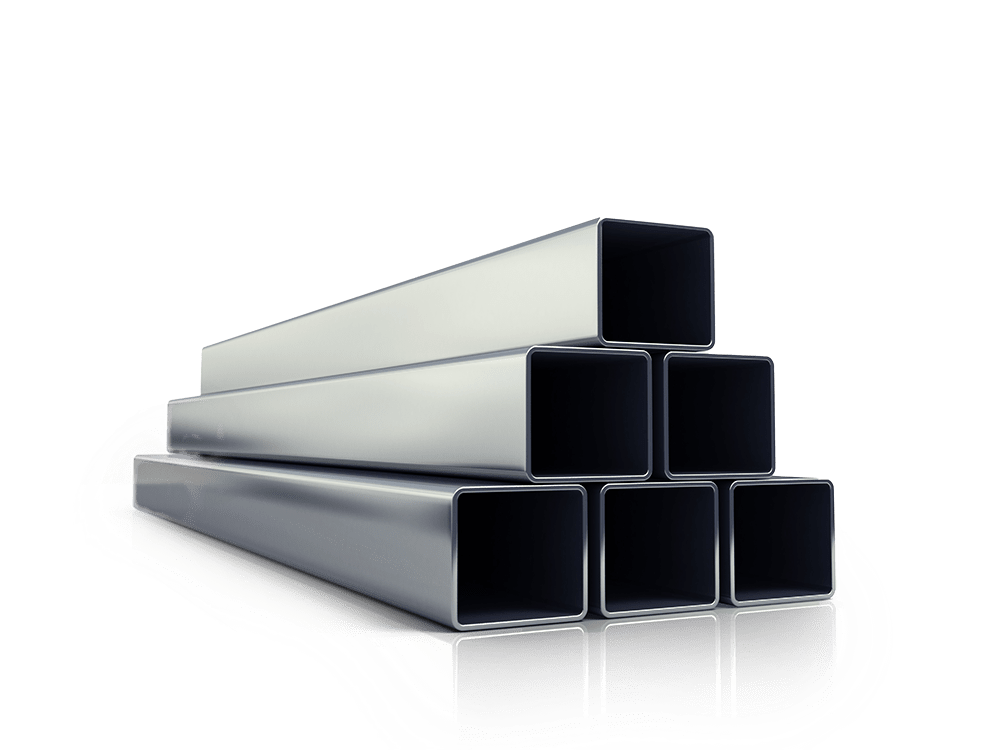
Steel Tubing for the Construction Industry
Steel tubing for the construction industry is pivotal, providing crucial structural support and versatility for various applications.
Partner with us today and explore our comprehensive range of tubing products designed to meet the unique demands of the construction industry, empowering your projects with exceptional quality and performance.
Steel Tubing for Construction
At Alliance Tubular Products, we understand that the construction industry demands durable materials to meet the market's growing needs. We offer various mechanical and structural steel tubes for construction equipment manufacturers in varying sizes, lengths, and grades to provide high-quality solutions for structural frameworks, heavy machinery, and other construction equipment.
Steel Tubing Solutions Designed for Construction Manufacturing

Alliance Tubular Products provides high-quality structural steel tubing tailored for the construction industry, offering the strength, consistency, and reliability your projects demand.
Our ASTM-compliant steel tubing delivers exceptional load-bearing capability and long-lasting performance across a wide range of structural applications from commercial infrastructure to residential builds.
- Superior Structural Support: Engineered and manufactured to withstand high loads and demanding construction environments.
- Versatile Applications: Ideal for framework, supports, braces, trusses, and more.
- Precision Manufacturing: Tight tolerances and straight lengths enhance ease of installation.
Why Building Contractors Choose Alliance Tubular Products
At Alliance Tubular Products, we understand that the construction industry demands durable materials to meet the market's growing needs. We offer various mechanical and structural steel tubes for construction equipment manufacturers in varying sizes, lengths, and grades to provide high-quality solutions for structural frameworks, heavy machinery, and other construction equipment.
Structural Framing Members
A500 tubing is commonly used to construct primary and secondary framing members in commercial and industrial buildings. Square and rectangular HSS provide rigid, uniform support for structural load paths with a clean architectural look when exposed.
Columns, Beams & Braces
Structural tubes serve as vertical columns, horizontal beams, and diagonal braces in steel frameworks, distributing loads efficiently while resisting buckling and lateral forces. Engineers specify A500 grades b, c, and d for its dimensional accuracy and high yield strength.
Canopies & Awnings
A500 tubing performs well in exterior building features such as canopies, awnings, and entrance structures, where both structural support and architectural appeal are important. These hollow sections handle environmental stresses while allowing for aesthetically pleasing designs.
Bridges & Walkways
In infrastructure projects such as pedestrian bridges, elevated walkways, and support framing for infrastructure signage, ASTM A500 tubing's strength and torsional resistance make it an effective choice for handling dynamic loads and long spans.
Equipment Support Frames
Construction sites require robust support frameworks for heavy equipment and mechanical systems. A500 structural tubing is the preferred choice for equipment supports, platforms, and scaffolding frames due to its durability and weldability.
Safety Rails & Barriers
Because of its consistent strength and clean geometry, A500 tubing is also used for guardrails, handrails, and safety barrier systems around rooftops, stairways, mezzanines, and pedestrian pathways, enhancing both safety and visual design quality.

The Alliance Advantage
Across Alliance Family, we proudly offer an extensive range of services. Our expertise encompasses flat-rolled products, steel tubing, and precisely crafted fabricated/welded assemblies. These value-added services result from comprehensive engineering, production, and shipping processes, all seamlessly integrated within our unified campus.
Learn MoreFrequently Asked Questions
While pipes and tubes may look similar, they serve different purposes in construction applications. Here are the key distinctions:
Pipe is typically round and measured by nominal pipe size (NPS). It's primarily designed for transporting fluids and gases through a system.
Structural tubing, on the other hand, is measured by its actual outside diameter (OD) and wall thickness, providing more precise specifications. Tubing offers several advantages for construction projects:
- Higher structural strength – making it ideal for load-bearing applications
- Easier to bend and fabricate – allowing for more versatile designs
- Better dimensional accuracy – critical for structural integrity
When your project requires structural support rather than fluid transport, tubing is typically the superior choice.
Want to dive deeper into the technical differences? Read our comprehensive guide: The Key Differences Between Tube and Pipe
Absolutely! Steel tubing is an excellent choice for outdoor construction projects, offering several key advantages:
Exceptional Strength-to-Weight Ratio – Steel tubing delivers maximum structural support without adding unnecessary weight to your project.
Built for Durability – Unlike wood, steel won't rot, warp, or deteriorate over time, even when exposed to the elements.
Corrosion Protection – Steel tubing can be coated with protective finishes to resist rust and corrosion, ensuring long-term performance in any climate.
Low Maintenance – Once properly coated, steel tubing requires minimal upkeep while maintaining its structural integrity for decades.
Easy to Fabricate – Steel tubing's versatility makes it simple to cut, weld, and shape to meet your specific project requirements.
Whether you're building outdoor structures, frameworks, or support systems, steel tubing provides the reliability and longevity your project demands.
Selecting the right steel tubing involves several key considerations.
Here's a step-by-step approach:
- Define Your Purpose and Functionality – What will the tubing support or connect? Understanding the application helps determine the strength requirements.
- Select Your Material – At Alliance Tubular Products, we offer hot-rolled (HR) and hot-rolled pickled and oiled (HRPO) options, each with distinct surface finishes and properties.
- Choose Your Shape – We manufacture both square and rectangular structural and mechanical tubing to suit different design needs.
- Determine Your Specifications – Know your requirements:
- Wall thickness
- Outside diameter (OD)
- Length
- Verify ASTM Standards – Ensure your tubing meets the appropriate industry standards for your application.
- Select the Right Grade – Alliance Tubular Products manufactures:
- ASTM A500 B,
- ASTM A500 C,
- ASTM A500 D,
for structural applications.
Not sure where to start? Our team can help you identify the ideal specifications for your project.
Yes! Steel tubing is highly versatile and can be easily welded and fabricated directly on-site, making it ideal for construction projects with custom requirements.
Welding Methods – Steel tubing works well with common welding techniques, including:
- MIG (Metal Inert Gas) welding
- TIG (Tungsten Inert Gas) welding
Fabrication Capabilities – Construction teams can perform a full range of fabrication work on-site:
- Cutting to precise lengths
- Notching for connections
- Bending for angles and curves
- Welding for secure joints
This on-site flexibility allows contractors to adapt quickly to project changes, create custom configurations, and ensure precise fits without delays from off-site fabrication.
Absolutely! Steel tubing, also known as Hollow Structural Sections (HSS), is engineered to deliver maximum strength while minimizing weight—making it a smart choice for modern construction.
How Steel Tubing Achieves Superior Strength-to-Weight Performance:
Smart Material Placement – Steel tubing positions material away from the center and toward the outer edges, where it provides the greatest resistance to bending and twisting forces. This hollow design uses less steel while delivering performance comparable to or better than that of solid sections.
Exceptional Load-Bearing Capacity – Hollow tubes excel at supporting vertical loads and resisting buckling, making them particularly effective for columns, beams, and structural frameworks.
Proven Efficiency – In practice, switching from solid steel to hollow tubing can reduce structural weight by 15–20% while maintaining full load-bearing capacity.
Shape-Specific Benefits:
- Round tubing offers optimal torsion resistance and typically weighs 20% less than square tubing with equivalent wall thickness
- Square and rectangular tubing provide excellent bending resistance for frames and beams handling directional loads
Additional Construction Advantages:
Cost Savings – Lighter components mean reduced transportation expenses and lower shipping costs to your job site.
Faster Installation – Less weight requires smaller lifting equipment, reducing equipment costs and speeding up project timelines.
Engineering Consistency – Steel tubing maintains uniform strength and dimensions throughout, simplifying design calculations and project planning.
Important Considerations:
While steel tubing offers significant advantages, proper engineering is essential. Tubes with very thin walls relative to their diameter may be susceptible to buckling under extreme stress, so working with appropriate diameter-to-thickness ratios is critical. Additionally, while initial material costs may be slightly higher than solid sections, these expenses are typically offset by savings in labor, transportation, and installation.
Steel tubing represents a proven solution for reducing structural weight in construction without compromising the strength and reliability your project demands.
Yes, ASTM A500 is compliant with commercial and industrial building codes.
Short answer, yes! Steel tubing is an excellent choice for sustainable construction projects, offering environmental benefits that align with modern green building goals.
Infinitely Recyclable – Steel is 100% recyclable and can be reprocessed endlessly without any loss of strength or quality. This infinite lifecycle means today's steel tubing can become tomorrow's building materials.
Extended Building Lifespan – Steel's resistance to rotting, cracking, and pest damage ensures structures last longer, reducing the need for replacement materials and minimizing waste over time.
Recognized by Green Building Standards – Steel tubing is approved and valued by major sustainability certification programs, including:
- LEED (Leadership in Energy and Environmental Design)
- BREEAM (Building Research Establishment Environmental Assessment Method)
Reduced Carbon Footprint – Choosing North American-produced steel can further enhance your project's sustainability profile by minimizing transportation emissions compared to imported materials.
When you select steel tubing for your construction project, you're choosing a material that supports both structural performance and environmental responsibility.
Structural tubing streamlines construction projects in multiple ways, helping contractors save time and reduce costs without compromising quality.
Lightweight Yet Strong – The exceptional strength-to-weight ratio means crews can handle and position materials more easily, reducing physical strain and safety risks on the job site.
Faster Assembly – Structural tubing is designed for quick fabrication and installation. Its uniform dimensions and clean edges allow for precise cutting, welding, and joining with minimal preparation.
Superior Connections – The consistent geometry of tubing creates reliable connection points for welding, bolting, or other joining methods, ensuring strong, stable structures.
Reduced Material Handling – Lighter components require less heavy equipment for transportation and installation, lowering equipment rental costs and speeding up project timelines.
Cost Savings Throughout the Project – From reduced shipping expenses to faster installation times, structural tubing helps control costs at every stage of construction.
Consistent Performance – Enhanced material properties and manufacturing standards ensure predictable behavior, reducing the need for on-site adjustments and rework.
By choosing structural tubing, you're investing in a material that works as efficiently as your team does.
Industries Served
Agriculture
For generations, the hardworking farmer has been the steadfast pillar of the American way of life. From cultivating vast fields to tending livestock, the farmer's commitment to nourishing and sustaining our communities is unparalleled.
Learn MoreAutomotive & Transportation
In the fast-paced world of automotive and transportation, steel tubing has become essential for design, development, manufacturing, and elevated performance.
Learn MoreFitness Equipment
Within the fitness industry, mechanical tubing plays a vital role in creating high-performance fitness equipment.
Learn MoreSteel Service Center
Alliance Tubular Products is at the forefront of a leading steel service centers that excels in distributing and processing high-quality steel tubing.
Learn MoreMaterial Handling
Material handling is much more than just physical movements; it involves storing, controlling, and protecting products and materials throughout the supply chain.
Learn MoreWhat Can We Do For You?
Do you have any questions regarding quotes, materials, services, quality, supply chain solutions, and logistics? Creating custom supply chain solutions tailored to your specific needs and business is at the core of Alliance Tubular Products. Contact us today, and let's get started together.