
.webp)
ASTM A500 Structural Steel Tubing: Grades, Specs, and Benefits
Structural steel tubing is hollow-shaped steel used in construction and assemblies, specifically for load-bearing structures. It is available in various cross-sectional forms, including round, square, and rectangular.
Structural tubing provides strength, durability, and stability to support heavy loads while reducing weight in assemblies.
Tubular shapes are produced by forming and welding flat-rolled coils into the desired tubular shape. The resulting weld creates a strong bond, making it suitable for use in columns, beams, braces, and frameworks.
Structural steel tubing is used in various construction projects, including buildings, bridges, and industrial complexes. It allows architects and engineers to create designs creatively while withstanding effective dispersion and load support. The hollow nature allows several utilities to be routed through, making it one of the most favored choices in the construction sector.
Structural steel tubing offers numerous desirable features, including strength and durability, ease of fabrication, and multiple connection methods, such as welding, bolting, and fastening. Furthermore, using steel in construction is an environmentally friendly activity, as steel can be recycled.
What is ASTM A500?
ASTM A500 is a standard for cold-formed, welded, and seamless carbon steel structural tubing.
ASTM A500 covers several grades of carbon steel tubing, including Grade A, Grade B, Grade C, and Grade D. Each grade has different mechanical properties and is suitable for various structural applications. Available in round, square, and rectangular shapes, this specification defines Hollow Structural Sections (HSS) that are essential to structural steel applications across construction, manufacturing, and infrastructure.
The ASTM A500 specification covers the chemical composition, tensile strength, yield strength, elongation, and other mechanical properties of each grade of carbon steel tubing. It also covers testing, dimensions, and tolerances.
As a trusted manufacturer and supplier of high-quality steel tubing, Alliance Tubular Products produces ASTM A500 tubing for industries demanding strength, precision, and consistency.
ASTM A500 defines the standard for producing structural tubing made from flat-rolled steel, formed and welded using Electric Resistance Welding (ERW). Weld seams are required to achieve full structural strength, and the tubing is typically supplied without the removal of internal flash.
ASTM A500 tubing is known for:
- High strength-to-weight ratio
- Uniform mechanical properties
- Excellent structural integrity
Alliance Tubular Products: Your ASTM A500 Supplier
Alliance Tubular Products manufactures and supplies ASTM A500 Grades B, C, and D, supporting a wide range of structural applications.
We produce square and rectangular tubing in the following size ranges:
- Square Tubing: 1.5” – 5.0” (38 mm – 127 mm)
- Rectangular Tubing: 1.5” x 2.0” – 4.0” x 6.0” (38 mm x 51 mm – 102 mm x 152 mm)
- Lengths up to 50'
Our fully automated direct-form mill utilizes the latest technology to deliver precise, high-speed production with consistent quality across every piece of tubing. Whether you're building data centers, machinery, fencing systems, or load-bearing frames, Alliance Tubular Products has the structural tubing you need to build it better.
Grade Spotlight: Key Characteristics of ASTM A500 Tubing
Understanding the differences between Grades B, C, and D of ASTM A500 helps ensure you choose the right structural tubing for your specific project needs. Alliance Tubular Products supplies Grades B, C, and D, offering scalable solutions across a wide range of structural and industrial applications.
Grade B:
Grade B: Versatile Strength for General Applications
- Tensile Strength: ≥ 400 MPa
- Yield Strength: ≥ 315 MPa
Overview:
- ASTM A500 Grade B is the most commonly specified grade and strikes a balance between strength, ductility, and cost. It offers greater load-bearing capacity than Grade A, making it ideal for structural applications that don't require the maximum strength of Grade C or D.
Typical Applications:
- Pipe and conduit supports
- Equipment frames and skid bases
- Safety and guardrails
- Commercial signage and awning frames
- General structural framework in buildings and fabrication projects
Key Benefits:
- Reliable strength at a competitive cost
- Excellent formability and weldability
- Widely available and easy to source
- Ideal for moderate-stress applications in construction and manufacturing
Grade C:
Grade C: Enhanced Strength for Demanding Environments
- Tensile Strength: ≥ 425 MPa
- Yield Strength: ≥ 345 MPa
Overview:
- ASTM A500 Grade C provides a significant increase in strength compared to Grade B. It's engineered for more rigorous structural demands and is often used in high-load, long-span, or high-impact environments. This grade is commonly selected when structural integrity is critical under dynamic or heavy loads.
Typical Applications:
- Structural framing in large-scale commercial and industrial buildings
- Bridge construction and pedestrian walkways
- Support structures for cranes, lifts, and rigging equipment
- ROPS (Roll-Over Protective Structures) for agricultural and construction equipment
- Modular steel frameworks where the strength-to-weight ratio matters
Key Benefits:
- Higher yield and tensile strength for improved performance
- Greater durability in high-stress environments
- Maintains dimensional accuracy and form under load
- Ideal for projects that demand safety, longevity, and structural resilience
Grade D:
Grade D: Maximum Strength for Critical Structural Use
- Tensile Strength: Comparable to Grade C
- Yield Strength: Highest among all A500 grades
Overview:
- ASTM A500 Grade D is designed for the most structurally demanding applications. It undergoes heat treatment to enhance mechanical performance, making it ideal for use in safety-critical and load-intensive environments where failure is not an option.
Typical Applications:
- Infrastructure requiring high fatigue resistance, such as overpasses and transmission towers
- Heavy machinery and mining equipment frames
- Structural supports in transportation, such as rail and highway infrastructure
- High-impact zones in defense, aerospace, ground support, or specialized industrial facilities
- Custom OEM structural components needing certified maximum strength
Key Benefits:
- Highest yield strength available under the A500 specification
- Engineered for extreme durability and structural safety
- Heat-treated for superior consistency and reliability
- Optimal for mission-critical structures exposed to heavy loads and harsh conditions
Types of Structural Tubing
Hot-Rolled Steel Tubing:
Hot Roll Steel requires less processing than cold-rolled steel; hot rolled steel is typically more cost-effective.
Hot-rolled steel is suitable when dimensional tolerances and surface finish are not as crucial. The material processed in this manner exhibits superior formability and workability.
Other benefits include:
- Eliminates Microstructure Defects
- Improved Mechanical Properties
- Increased Ductility
- Lower Cost
- More Malleable
Hot Rolled Pickled and Oiled Tubing:
Hot-rolled pickled and oiled tubing is an asset in many sectors and industries.
From the highly structurally demanding construction industry to the precise automotive sector, trust the great quality and performance hot rolled pickled and oiled tubular products offer.
- Improved Surface Quality
- Enhanced Weldability
- Corrosion Resistance
- Increased Formability and Versatility
Explore the versatility and strength of our high-quality ASTM A500 Carbon Steel Structural Steel Tubing (hollow structural sections). Designed and manufactured with precision, our ERW structural steel tubing products support a wide range of infrastructure, automotive, and agricultural sectors.
Common Applications of Structural Tubing
Construction Industry:
- Building Frames
- Offshore Structures
Infrastructure Projects:
- Bridges
- Railings
- Highway guardrails
Material Handling:
- Warehouse and Distribution Centers
- Industrial Racking Systems
- Bulk Material Handling Equipment
Automotive and Transportation:
- Vehicle Frames
- Commercial Vehicles
- Car Ports
Recreational and Sporting Structures:
- Stadiums
- Playgrounds
- Event Staging Equipment
Renewable Energy:
- Support structures for solar panels and wind turbines.
Fencing:

Benefits of Structural Tubing
- Strength: The strength-to-weight ratio of structural steel tubing is remarkable; it can support heavy loads while minimizing the overall weight of a structure.
- Uniformity: HSS plays a vital role in OEM applications because it guarantees uniformity in size, shape, and tolerance, thereby ensuring reliable and expected usage.
- Ease of Fabrication: HSS can easily be bent, formed, punched, and drilled.
- Durability: Steel is undoubtedly one of the most durable and resilient materials. Its exceptional resistance to wear, decay, and pests makes it ideal for building long-lasting structures.
- Safety: Steel's non-combustibility makes it a safer material to work with in buildings, for it does not ignite or spread flames. Steel structures are also more resistant to natural disasters such as earthquakes and hurricanes.
How to Select the Right Structural Tubing:
Selecting the proper type of structural tubing can make the greatest difference to the success of your project. With shapes, sizes, and various materials available, knowing what to pay attention to may save you a great deal of time when choosing and ensuring you get the best performance.
Here's a quick guide to help you choose correctly:
1. Understanding Application Requirements
-
- Load Capacity: How much weight or force will the structural tubing need to support?
- Environment: What elements will the structural tubing be exposed to? Moisture, High Temperatures, corrosive elements?
- Aesthetic: Is it visible? What does it need to look like?
2. Choose the right shape.
-
- Rectangle or Square: These provide uniform strength and are ideal for frameworks, trailers, and construction projects. Alliance Tubular can produce virtually any square and rectangular size between 1.5” and 5.0” (38mm—127mm) square, and 1.5” x 2.0” to 4.0” x 6.0” (38 mm x 152mm). Alliance Tubular Products manufactures Electric Resistance Welded (ERW) products and Hollow Structural Sections (HSS) tubing. ATP can also produce up to 50' lengths.
3. Evaluating Material Options
-
- The A-500 Grade selection impacts the strength and durability of your tubing. Alliance Tubular Products can produce the correct grade for your application.
4. Consider Wall thickness and Dimensions
-
- Thicker walls: Higher load bearing
- Thinner walls: cost savings and reduced weight
5. Review Standards and Certifications
- Alliance Tubular Products is committed to delivering high-quality products that meet the needs and expectations of our customers. We are committed to continually improving the effectiveness of the Quality Management System.
- ISO Cert: https://www.alliancetubularproducts.net/resources/
6. Partner with a Knowledgeable Supplier
- As an extension of Alliance, Alliance Tubular Products is the only steel tube mill in the country that can produce your specialty sections and metric shapes without the expense and lead times associated with new tooling. Alliance Tubular Products offers a range of value-added services for steel tubing that sets us apart from the competition. Our mill is direct form quality, and we ensure that every product meets rigorous standards for performance and reliability.
Alliance Tubular can produce virtually any square and rectangular size between 1.5” and 5.0” (38mm - 127mm) square and 1.5” x 2.0” to 4.0” x 6.0” (102mm x 152mm). Alliance Tubular Products manufactures Electric Resistance Welded (ERW) products and Hollow Structural Sections (HSS) tubing. ATP can also produce up to 50' lengths.
The mill is a fully automated direct form line, utilizing all the latest technologies and efficiencies to optimize speed and consistency. From master coil to tubular products, Alliance Tubular Products offers an extensive selection of tubular products crafted to meet each customer's specific needs.
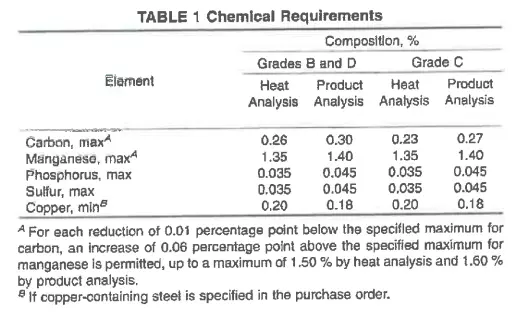
Chemical Requirements
Tensile Requirements

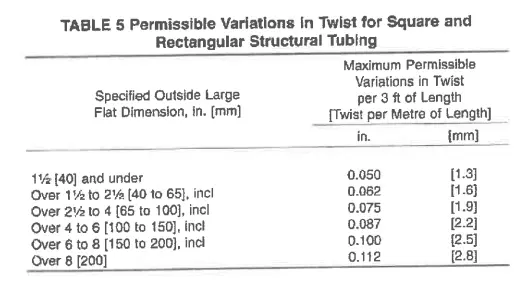
Twist for Squares and Rectangular Structural Tubing
Partner with Alliance Tubular Products for ASTM A500 Solutions
In conclusion, structural steel tubing offers unparalleled versatility and reliability across various industries. Its applications, ranging from construction and infrastructure to automotive and renewable energy, are numerous and significant in their impact.
Structural tubing's strength, durability, and ease of fabrication make it invaluable to engineers and architects alike.
Choices regarding the type of material, shape, and supplier are crucial to optimizing its value. Working with an experienced supplier and manufacturer like Alliance Tubular Products' A500 Structural Tubing ensures that the business receives high-quality, customized solutions tailored to its specific needs.
As demand increases for creative and eco-friendly building materials, the future of the industry and design will be partly shaped by structural tubing.
Visit us at AllianceTubularProducts.net.